Overview

Our Philosophy
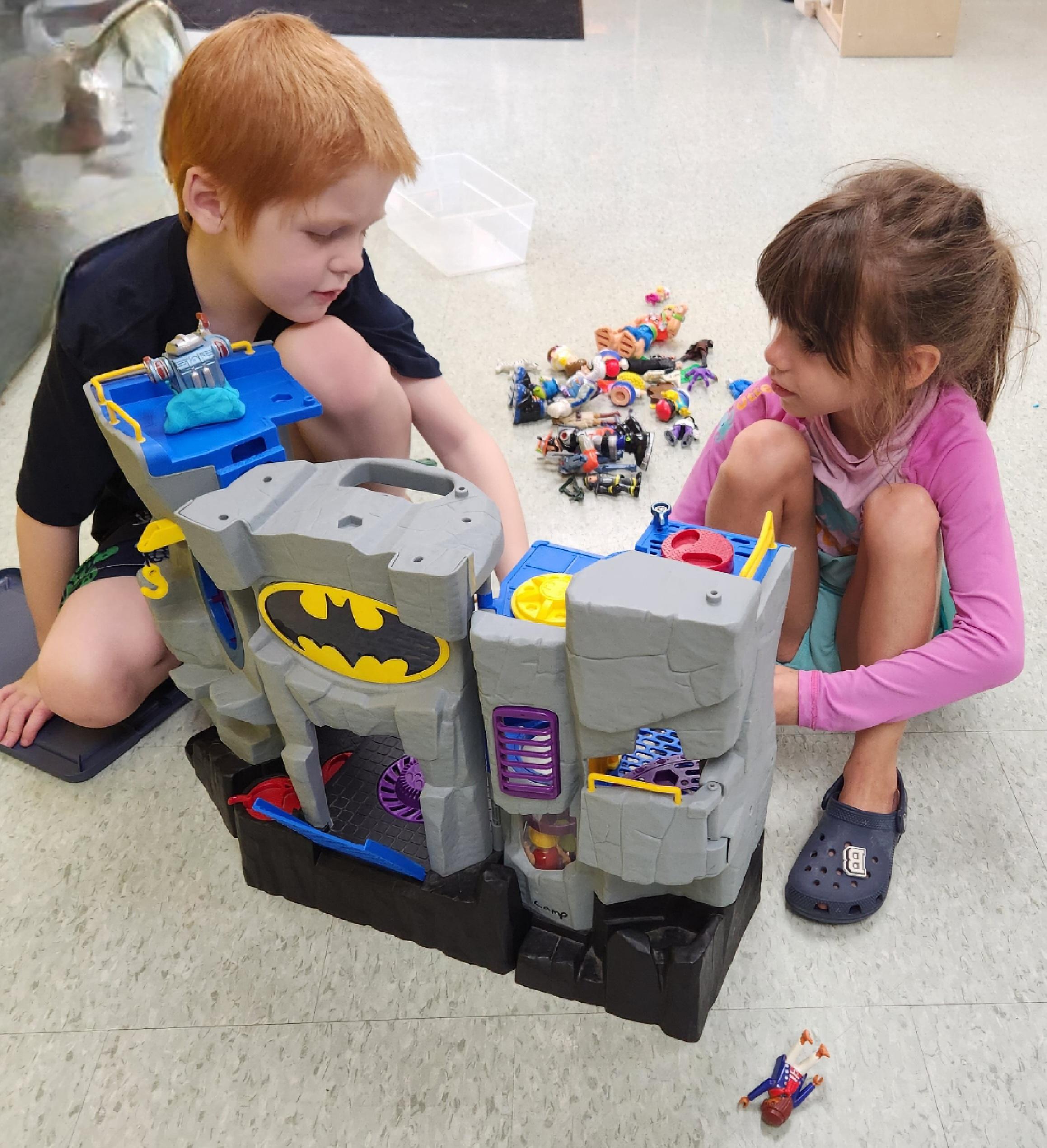
At the core of our program philosophy is the belief that our clinicians treat children, not disabilities. With that in mind, we develop individual treatment plans that address functional outcomes for each child, using a holistic and collaborative approach that considers communication needs in the home, at work or school, and in the community, working across disciplines to address the needs of the whole person.
Our Staff
Our speech-language pathologists hold Masters’ degrees, a Certificate of Clinical Competence from the American Speech-Language-Hearing Association, and licensure from the Maryland State Board of Examiners, Department of Mental Health and Hygiene.
Areas of Expertise
Our staff offers a wide variety of expertise, including training in Augmentative-Alternative Communication, PROMPT training, Hanen certification, Social Thinking®, Visualizing and Verbalizing®, The SOS Approach to Feeding, Orofacial Myofunctional Disorders, Floortime™, Meaningful Speech Course (Gestalt Language Processing/Natural Language Acquisition), and Lee-Silverman Voice Training (LSVT) LOUD.

Programs
We provide individual and group therapy sessions. Frequency, length and duration of therapy are determined by the findings and clinical recommendations from a current evaluation report within the past year, as well as the clinical judgment.
- Therapy programs are designed to meet the individual needs of each child in order to maximize his/her communication abilities.
- Formal treatment plans outlining a child’s goals are provided. Progress reports are completed at regular intervals to document the child’s ongoing progress related to the goals and continued areas of need.
- Family involvement and instruction are an integral part of all therapy programs. Home programming is emphasized to support and promote the carryover of skills.
- Therapy is coordinated with the other professionals participating in the child’s care. Services available within TLC include: hearing testing, occupational therapy, counseling, psychological and educational testing, and tutoring. Referrals to other disciplines for additional services are made when appropriate.
Speech-Language Therapy addresses the following areas:
- Language Disorders
- Social-Pragmatic Language Disorder
- Motor-Speech/Articulation Disorders
- Feeding Disorders
- Fluency Disorders
- Dyspraxia
- Dysarthria
- Augmentative-Alternative Communication needs
Evaluation is an integral part of the therapeutic process, as it provides the key to identifying each individual’s speech and language skills related to effective communication. We offer comprehensive speech-language, fluency, articulation, augmentative-alternative communication (AAC), and feeding evaluations. Evaluation results, discussion, and recommendations are documented in comprehensive reports and discussed with parents.
Speech-language evaluations address the following areas:
- Language Disorders
- Social-Pragmatic Language Disorder
- Motor-Speech/Articulation Disorders
- Feeding Disorders
- Fluency Disorders
- Dyspraxia
- Dysarthria
- Augmentative-Alternative Communication needs
TLC’s Speech-Language Pathology Department offers in-person and virtual voice therapy for adults and children.
Symptoms of a Potential Voice Disorder Can Include:
- Rough, breathy, strained, strangled, or inconsistent vocal quality
- Abnormally high or low pitch/loud or soft volume
- Vocal fatigue or loss of voice after extended use
- Frequent coughing or throat clearing
- Pain while speaking or singing
- Constant or periodic feeling of a lump in the throat
- Episodes of breathing difficulties
- Frequently running out of breath while speaking or singing
- Voice-related gender dysphoria
- Loss of vocal range in pitch or volume
Voice and Upper Airway Disorders We Treat Include:
- Vocal Hyperfunction/Muscle Tension Dysphonia
- Vocal Nodules and Polyps
- Induced/Exercise-Induced Laryngeal Obstruction (ILO/EILO)
- also called Paradoxical Vocal Cord Motion (PVFM) or Vocal Cord Dysfunction (VCD)
- Vocal Fold Paralysis/Paresis
- Spasmodic Dysphonia
- Chronic Cough
- Post-Operative Voice Care
- Granuloma
Gender-Affirming Voice Care:
- Gender-affirming voice and communication care, or GAVC, can help transgender and gender diverse individuals align the expression of their speaking voice with their identity. GAVC involves more than just adjusting pitch – intonation, resonance, loudness, speech smoothness, gesture, and many other parameters affect how we use our voice and how we are perceived. Working with a speech-language pathologist to maintain vocal change in an efficient, healthy, and sustainable way is key for long-term success.
Voice and Upper/Airway Evaluations:
TLC’s Voice and Upper Airway evaluations consist of three major parts:
- Case History – a detailed conversation with the clinician about the history of the problem or concern, including quality-of-life questionnaires and voice-related daily life tasks
- Voice Measurements – recordings are taken of the client performing various vocal tasks; these are analyzed using a variety of technological and perceptual methods to yield both objective and subjective data about vocal quality and functioning
- Aerodynamic Measurements – objective and subjective measurements of the client’s respiratory functioning and breath-voice coordination are taken using data from spirometry and other respiratory tasks
Some evaluations may include viewing the throat (pharynx and larynx) using a small, curved mirror, an in-office procedure called mirror laryngoscopy. If further imaging or evaluation is indicated, the clinician may order a referral to an otolaryngologist (ear-nose-and-throat/ENT).
Other referrals the clinician may make to coordinate care include pulmonology, nutrition, allergy, neurology, gastroenterology, cardiology, psychology, and other specialists.
Contact us for more information about our Voice and Upper Airway Program or to schedule services:
301-424-5200 x159 or OutpatientScheduling@TTLC.org
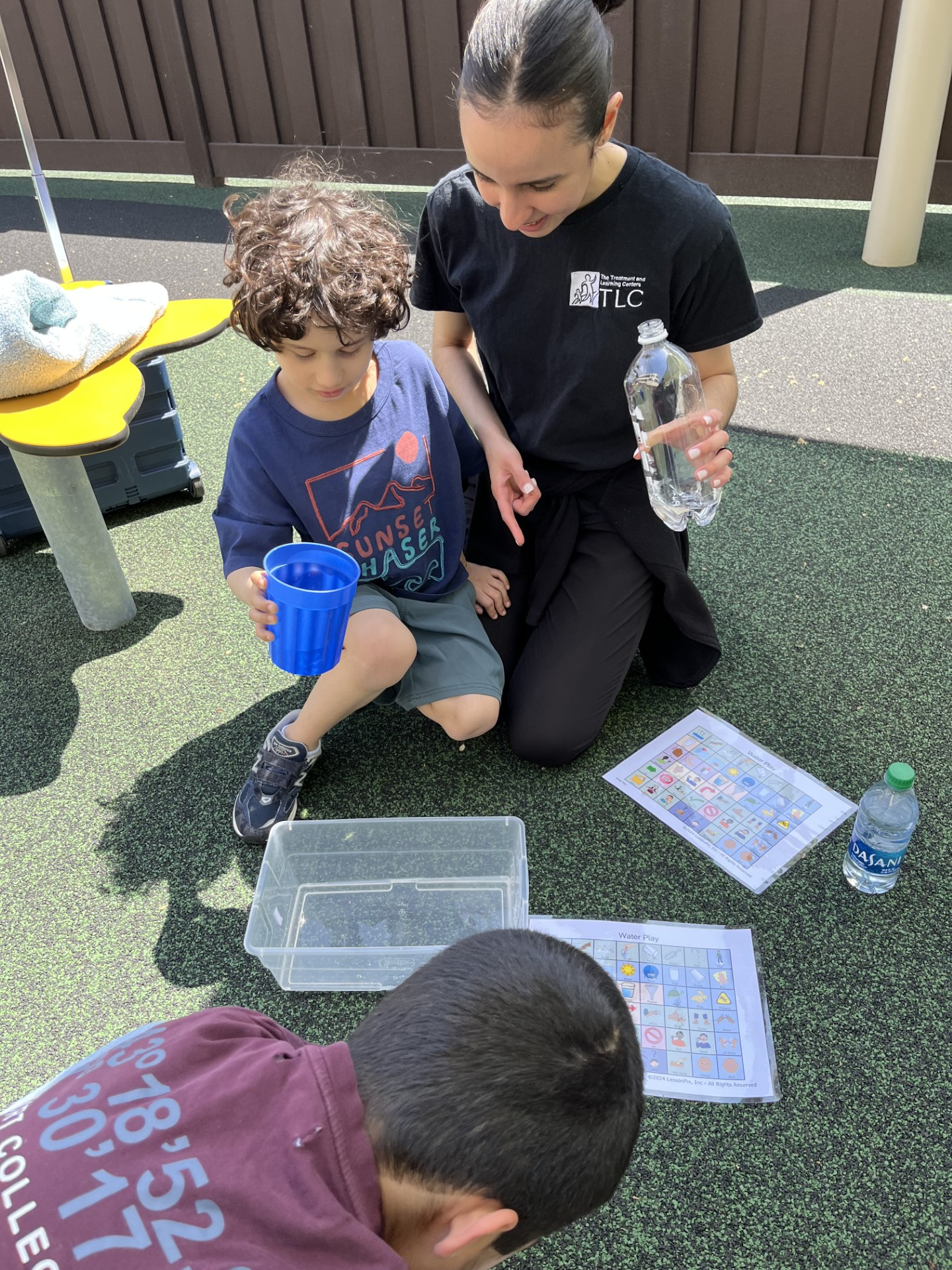
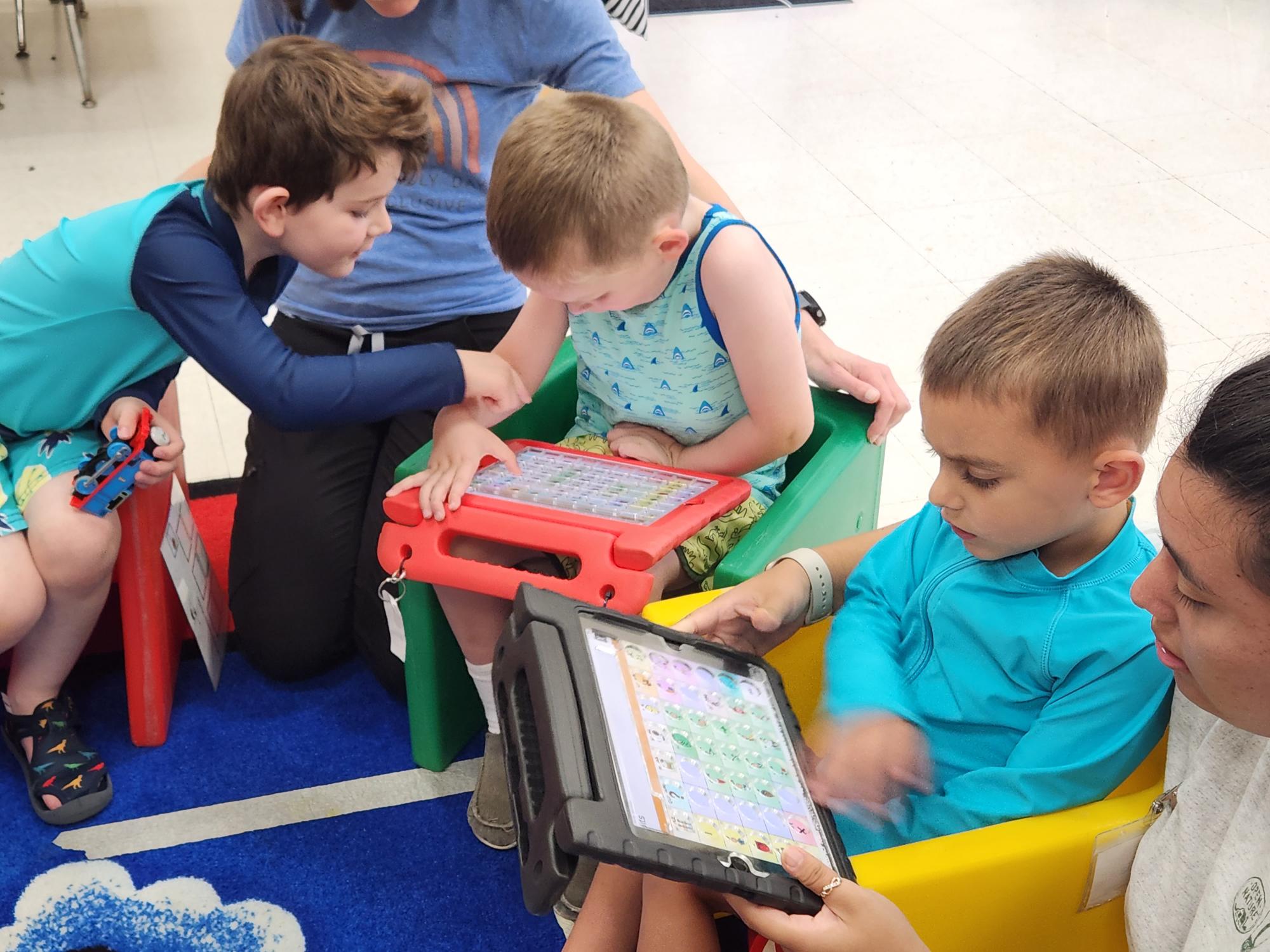
At TLC, our goal is to provide all individuals with a mode of communication that allows them to express their wants and needs and to develop their social communication skills. Our therapists provide assessments to determine the best AAC solution for the individual and therapy services to develop AAC competencies so the individual can communicate more effectively.
What is AAC?
AAC means all of the ways that someone communicates besides talking. People of all ages can use AAC if they have trouble with speech or language skills. Augmentative means to add to someone’s speech. Alternative means to be used instead of speech. Some people use AAC throughout their life. Others may use AAC only for a short time, like when they have surgery and can’t talk.
There are a lot of different types of AAC. No-tech and low-tech options include things like
- gestures and facial expressions,
- writing,
- drawing,
- spelling words by pointing to letters, and
- pointing to photos, pictures, or written words.
High-tech options include things like
- using an app on an iPad or tablet to communicate and
- using a computer with a “voice,” sometimes called a speech-generating device.
A person may use different types of AAC because there are many ways that we all communicate. An AAC system means all of the tools of this type that a person uses. (from ASHA.org)
What happens at an AAC Evaluation?
Therapists at TLC use feature matching, the process of matching an individual’s unique skills and needs to the features of AAC communication systems, tools, and strategies. Therapists obtain information about an individual’s receptive and expressive language skills, speech skills, vision, hearing, and motor skills. They then determine what communication needs exist and trial AAC systems to determine which ones can best meet those needs. AAC solutions could be low-tech or high-tech.
Why TLC AAC Therapy?
AAC therapy at TLC includes the following strategies to help an individual become a successful communicator:
- Developing AAC competencies with targeted goals
- Using core word teaching strategies
- Supporting Gestalt Language Processors who use AAC
- Integrating literacy instruction
- Supporting communication partners
- Using evidence-based practices such as modeling and least to most prompting
- Increasing engagement and motivation for communication
- Facilitating carryover of skills to all communication environments
TLC Handout: Providing Solutions and Strategies for Communication Success if Your Child Has an AAC Device.
At TLC, our goal is to make mealtimes an enjoyable experience for families. Therapists work with children and their families to determine the cause of feeding challenges and to develop personalized plans to promote healthy eating habits.
TLC offers an interdisciplinary program that combines the resources of our outpatient speech-language and occupational therapy programs. TLC therapists are licensed with advanced degrees, and have extensive experience in their fields.
Why TLC Feeding Therapy?
- Evaluations/Therapy
- Child-focused and play-based intervention
- Parent education and training
- Individual and group treatment
- SOS trained therapists
Diagnoses can include (but are not limited to) sensory and food aversions, failure to thrive, dysphagia, and oral motor difficulties.
Red Flags For Feeding Problems
- Challenging mealtimes
- Choking, gagging, coughing, vomiting during/after meals
- Refuses entire foods groups (e.g., meats, vegetables)
- Exhibits ongoing poor weight gain or weight loss
- Eats a limited range of foods, “picky eater”
- Has difficulty trying new foods
- Takes longer than 30 minutes to eat
- Has difficulty chewing foods
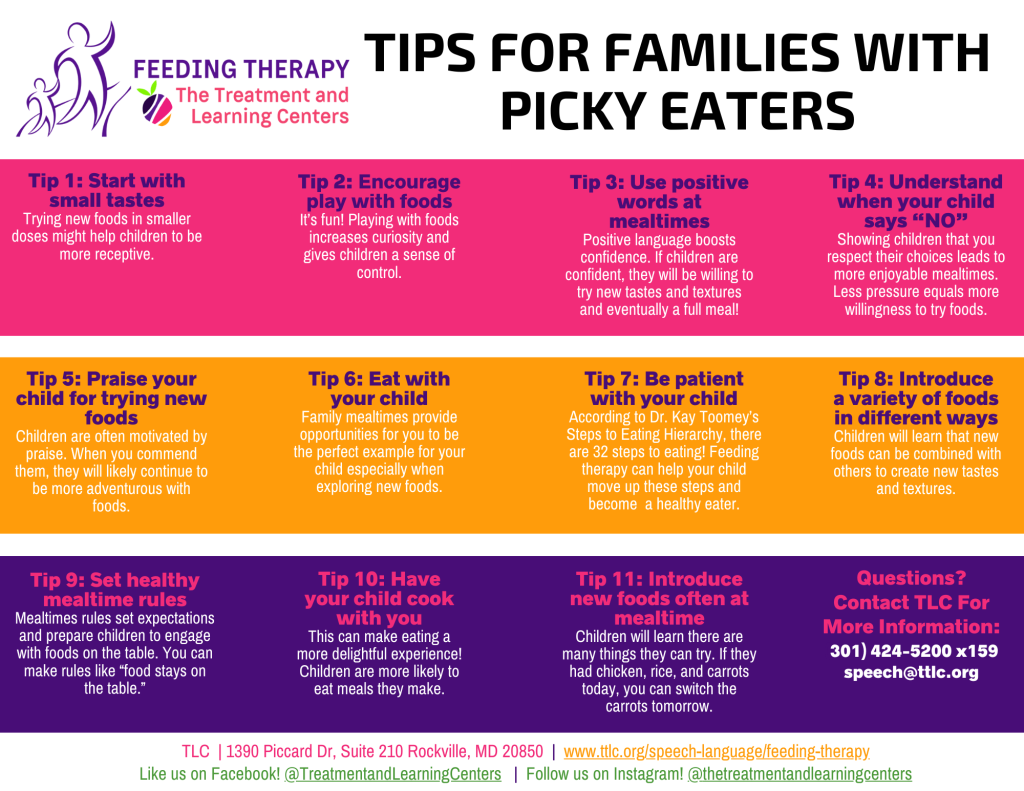
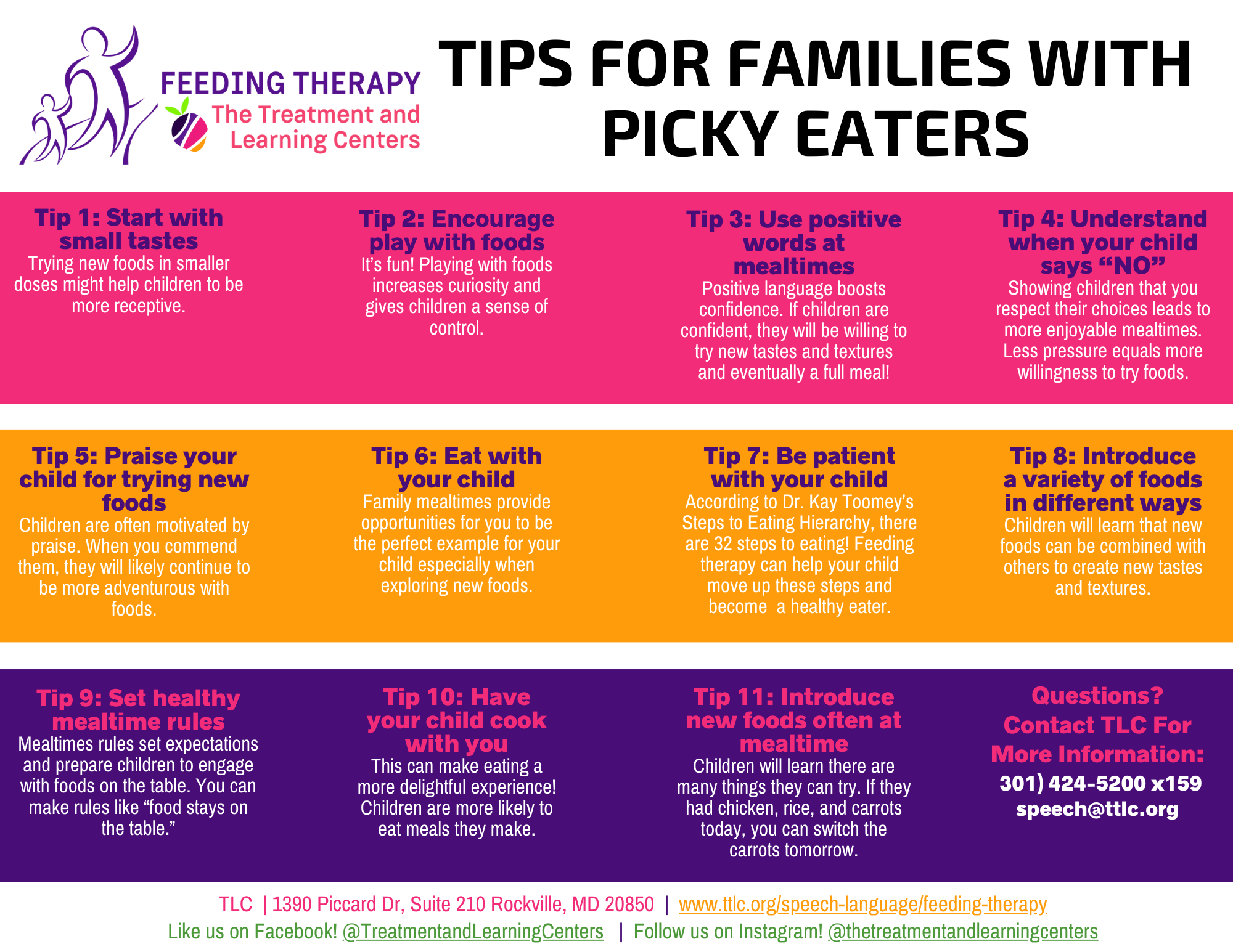
Downloadable “Feeding Therapy Tips” Parent Handout
If you are concerned about your child’s eating, please contact us to schedule an appointment: (301) 424-5200 x159 or OutpatientScheduling@ttlc.org
Virtual Services
TLC is open for virtual services in outpatient speech-language pathology. We are offering the following telehealth options:
- Weekly individual speech-language and feeding teletherapy sessions available via Zoom
- Therapy sessions can help to develop your child’s articulation, language, feeding, and play skills
- Individualized consultation and therapy available for children using AAC devices
- Initial speech-language screens via Zoom
- Individualized consultations with a speech-language pathologist to answer your questions regarding your child’s speech or language skills
If you are a new client and would like to schedule one of our virtual services or have questions about speech-language services at The Treatment and Learning Centers, please contact us at 301-424-5200 x159. Click here for a sample of our virtual speech-language therapy sessions.
Red Flags
Does your child have difficulties with day-to-day activities at home, school or out in the community? Do they experience challenges that do not seem to affect other children their age? If so, a pediatric speech-language pathologist may be able to help. Below is a list of red flags that may warrant a speech-language evaluation.
By Age 18 months, if your child:
- Has not begun verbalizing first words
- Does not respond to his/her name
- Does not follow simple directions
By Age 2 if your child:
- Does not have about a 200-word vocabulary
- Does not use two-word phrases (e.g., “more juice”)
- Does not demonstrate simple pretend play skills
By Age 3 if your child:
- Does not use at least three word sentences
- Cannot answer simple “who” and “what” questions
- Uses speech that is not understood about 75% of the time
- Cannot talk easily without repeating parts of words
By Age 4 if your child:
- Cannot ask when and how questions
- Cannot talk about what happened during the day
- Cannot us pronouns, like I, you, me, we, and they
By Age 5 if your child:
- Cannot understand words for order like first, then, next, last
- Uses speech that is not understood 100% of the time (with some mistakes on sounds such as /r/, /l/, or “th.”)
- Cannot tell a short story
- Cannot maintain a conversation
Meet Our Team

Safisha Seifullah, M.S., CCC-SLP
Rebecca Mals, M.S., CCC-SLP
Suzy Mabiala, M.S., CCC-SLP
Maura Bizzozero, M.A., CCC-SLP