개요
우리의 철학
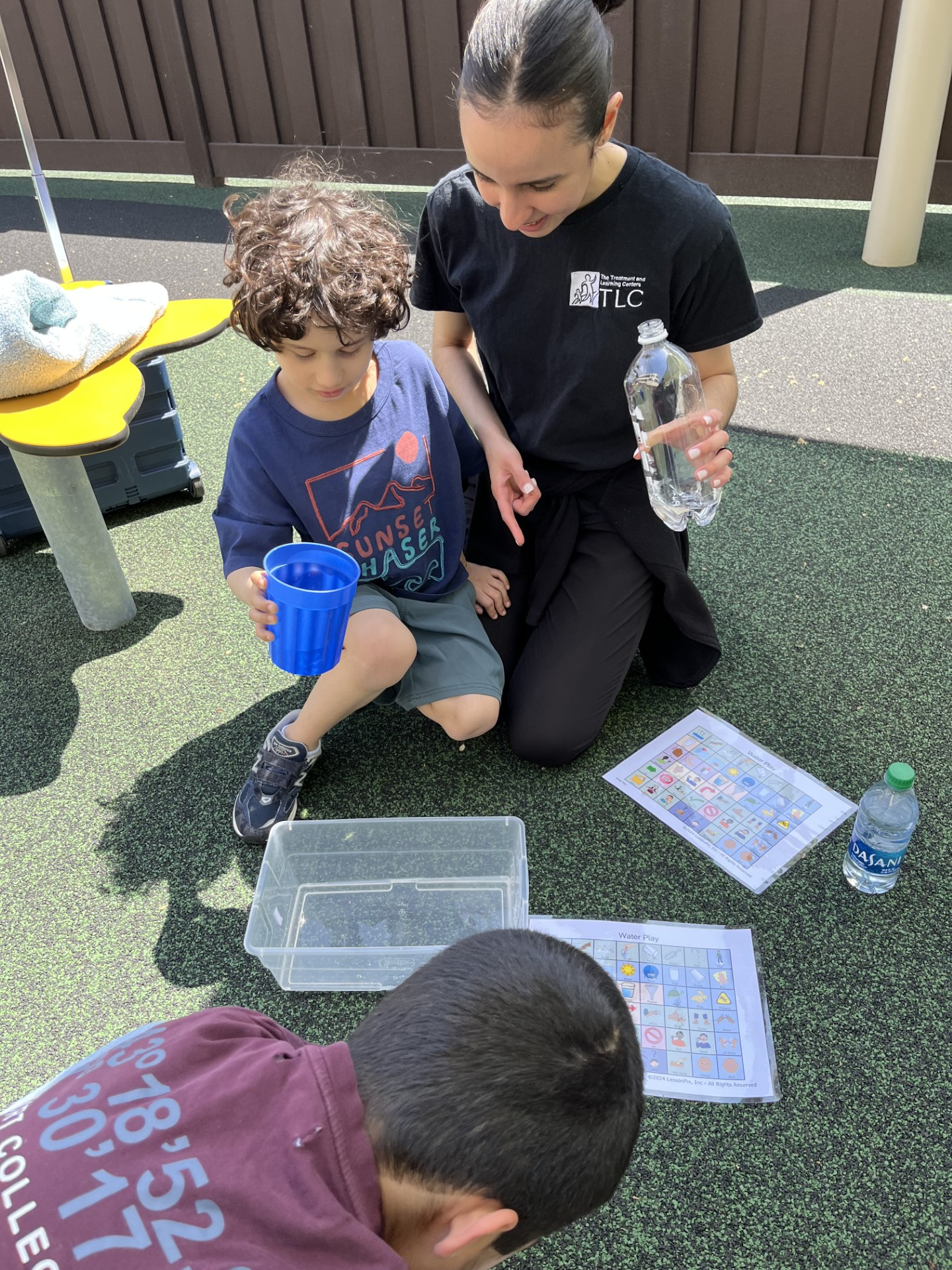
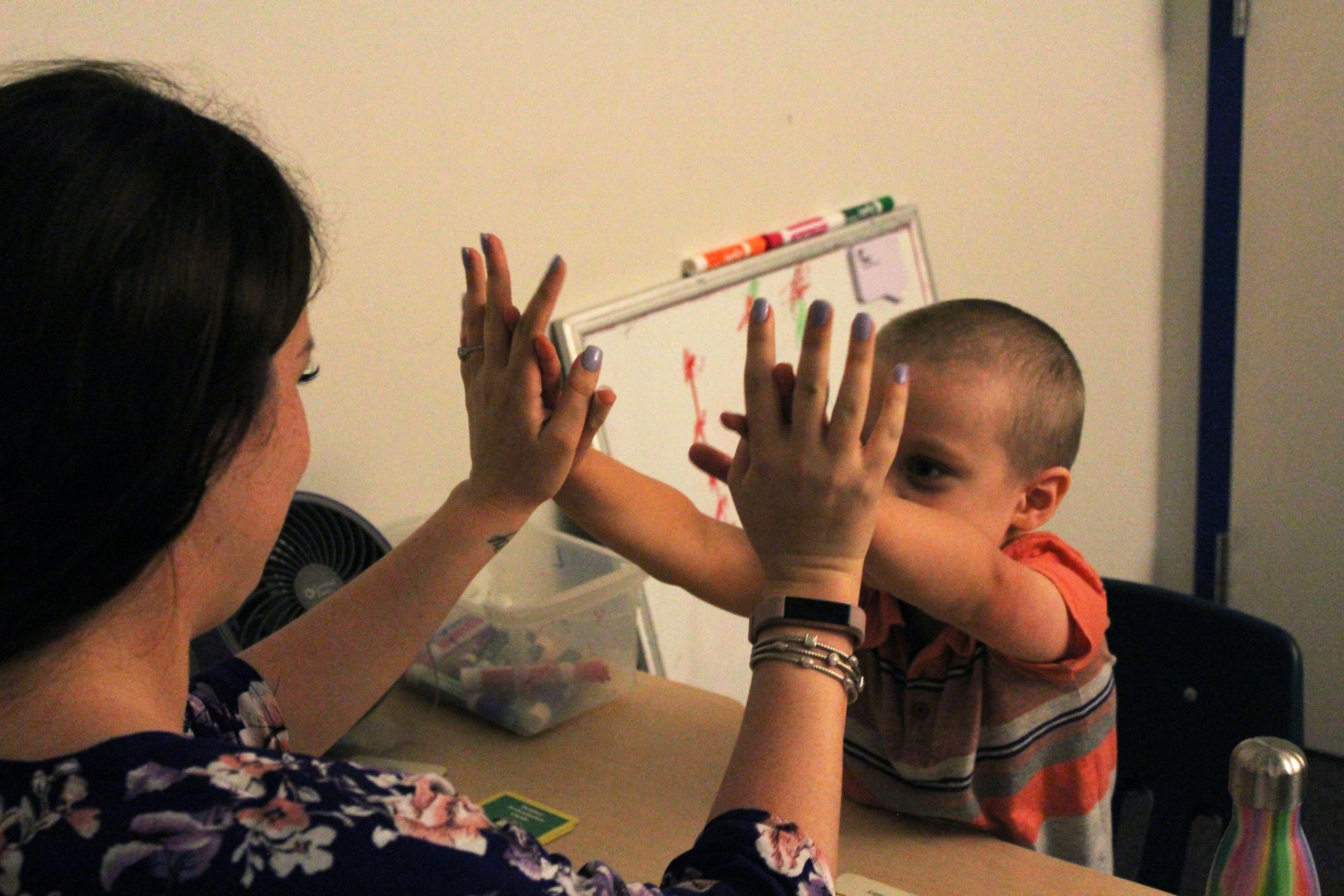
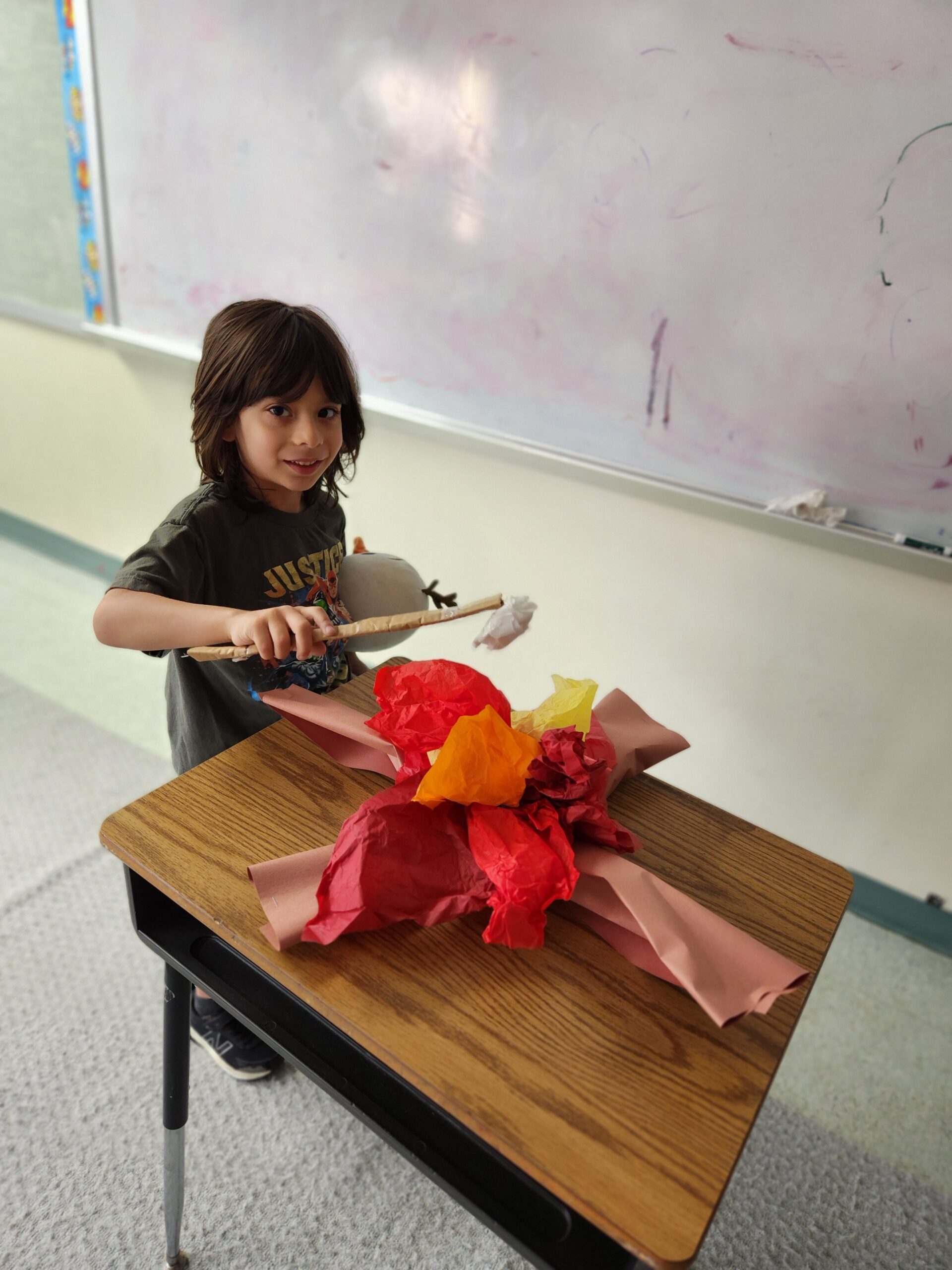
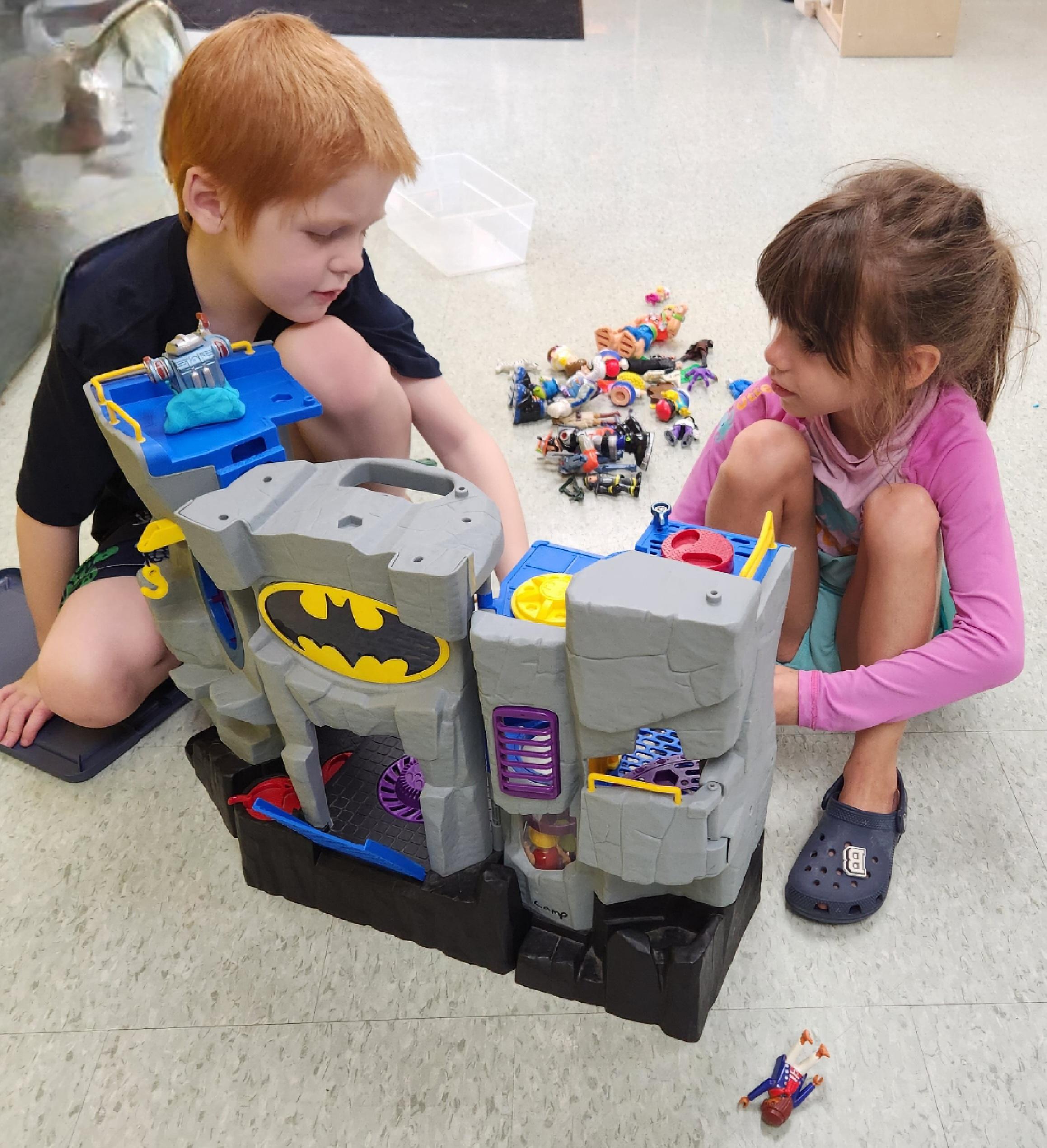
우리 프로그램 철학의 핵심은 임상의가 장애가 아닌 어린이를 치료한다는 믿음입니다. 이를 염두에두고 우리는 가정, 직장 또는 학교 및 지역 사회에서의 의사 소통 요구를 고려한 총체적이고 협력적인 접근 방식을 사용하여 각 어린이의 기능적 결과를 다루는 개별 치료 계획을 개발하여 전체 사람의 요구를 해결하기 위해 여러 분야에서 일합니다.
우리의 직원
우리의 언어 병리학자는 석사 학위, 미국 언어 청력 협회의 임상 역량 증명서, 메릴랜드 주 심사위원회, 정신 건강 및 위생부의 면허를 소지하고 있습니다.
전문 분야
Our staff offers a wide variety of expertise, including training in Augmentative-Alternative Communication, PROMPT training, Hanen certification, Social Thinking®, Visualizing and Verbalizing®, The SOS Approach to Feeding, Orofacial Myofunctional Disorders, Floortime™, Meaningful Speech Course (Gestalt Language Processing/Natural Language Acquisition), and Lee-Silverman Voice Training (LSVT) LOUD.

프로그램
우리는 개인 및 그룹 치료 세션을 제공합니다. 치료 빈도, 길이 및 기간은 지난 한 해 동안의 현재 평가 보고서의 결과 및 임상 권장 사항과 임상 판단에 따라 결정됩니다.
- 치료 프로그램은 의사 소통 능력을 극대화하기 위해 각 어린이의 개별적인 필요를 충족하도록 설계되었습니다.
- 아동의 목표를 설명하는 공식적인 치료 계획이 제공됩니다. 진행 보고서는 목표 및 지속적인 필요 영역과 관련된 아동의 지속적인 진행 상황을 문서화하기 위해 정기적으로 완료됩니다.
- 가족 참여와 교육은 모든 치료 프로그램의 필수적인 부분입니다. 홈 프로그래밍은 기술의 이월을 지원하고 촉진하기 위해 강조됩니다.
- 치료는 아동의 보살핌에 참여하는 다른 전문가들과 조정됩니다. TLC 내에서 이용할 수 있는 서비스에는 청력 검사, 작업 치료, 상담, 심리 및 교육 테스트, 개인 교습 등이 포함됩니다. 적절한 경우 추가 서비스에 대한 다른 분야에 대한 추천이 이루어집니다.
언어 - 언어 치료는 다음과 같은 영역을 다룹니다 :
- 언어 장애
- 사회 - 실용주의 언어 장애
- 모터 스피치/조음 장애
- 수유 장애
- 유창성 장애
- dyspraxia
- 디스사르트리아
- 증강-대체 통신 요구 사항
TLC’s Speech-Language Pathology Department offers in-person and virtual voice therapy for adults and children.
Symptoms of a Potential Voice Disorder Can Include:
- Rough, breathy, strained, strangled, or inconsistent vocal quality
- Abnormally high or low pitch/loud or soft volume
- Vocal fatigue or loss of voice after extended use
- Frequent coughing or throat clearing
- Pain while speaking or singing
- Constant or periodic feeling of a lump in the throat
- Episodes of breathing difficulties
- Frequently running out of breath while speaking or singing
- Voice-related gender dysphoria
- Loss of vocal range in pitch or volume
Voice and Upper Airway Disorders We Treat Include:
- Vocal Hyperfunction/Muscle Tension Dysphonia
- Vocal Nodules and Polyps
- Induced/Exercise-Induced Laryngeal Obstruction (ILO/EILO)
- also called Paradoxical Vocal Cord Motion (PVFM) or Vocal Cord Dysfunction (VCD)
- Vocal Fold Paralysis/Paresis
- Spasmodic Dysphonia
- Chronic Cough
- Post-Operative Voice Care
- Granuloma
Gender-Affirming Voice Care:
- Gender-affirming voice and communication care, or GAVC, can help transgender and gender diverse individuals align the expression of their speaking voice with their identity. GAVC involves more than just adjusting pitch – intonation, resonance, loudness, speech smoothness, gesture, and many other parameters affect how we use our voice and how we are perceived. Working with a speech-language pathologist to maintain vocal change in an efficient, healthy, and sustainable way is key for long-term success.
Voice and Upper/Airway Evaluations:
TLC’s Voice and Upper Airway evaluations consist of three major parts:
- Case History – a detailed conversation with the clinician about the history of the problem or concern, including quality-of-life questionnaires and voice-related daily life tasks
- Voice Measurements – recordings are taken of the client performing various vocal tasks; these are analyzed using a variety of technological and perceptual methods to yield both objective and subjective data about vocal quality and functioning
- Aerodynamic Measurements – objective and subjective measurements of the client’s respiratory functioning and breath-voice coordination are taken using data from spirometry and other respiratory tasks
Some evaluations may include viewing the throat (pharynx and larynx) using a small, curved mirror, an in-office procedure called mirror laryngoscopy. If further imaging or evaluation is indicated, the clinician may order a referral to an otolaryngologist (ear-nose-and-throat/ENT).
Other referrals the clinician may make to coordinate care include pulmonology, nutrition, allergy, neurology, gastroenterology, cardiology, psychology, and other specialists.
Contact us for more information about our Voice and Upper Airway Program or to schedule services:
301-424-5200 x159 or OutpatientScheduling@TTLC.org
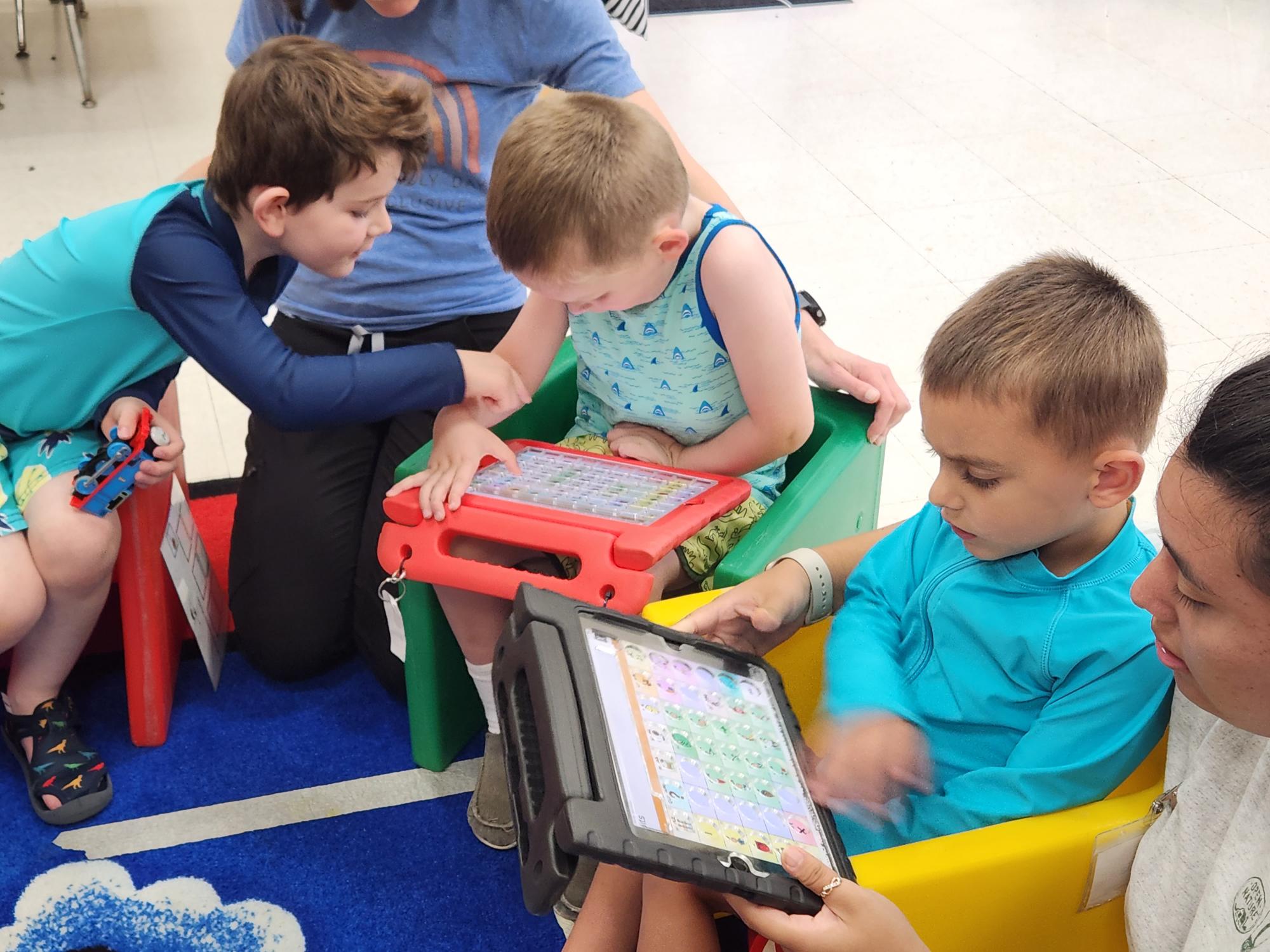
At TLC, our goal is to provide all individuals with a mode of communication that allows them to express their wants and needs and to develop their social communication skills. Our therapists provide assessments to determine the best AAC solution for the individual and therapy services to develop AAC competencies so the individual can communicate more effectively.
What is AAC?
AAC means all of the ways that someone communicates besides talking. People of all ages can use AAC if they have trouble with speech or language skills. Augmentative means to add to someone’s speech. Alternative means to be used instead of speech. Some people use AAC throughout their life. Others may use AAC only for a short time, like when they have surgery and can’t talk.
There are a lot of different types of AAC. No-tech and low-tech options include things like
- gestures and facial expressions,
- writing,
- drawing,
- spelling words by pointing to letters, and
- pointing to photos, pictures, or written words.
High-tech options include things like
- using an app on an iPad or tablet to communicate and
- using a computer with a “voice,” sometimes called a speech-generating device.
A person may use different types of AAC because there are many ways that we all communicate. An AAC system means all of the tools of this type that a person uses. (from ASHA.org)
What happens at an AAC Evaluation?
Therapists at TLC use feature matching, the process of matching an individual’s unique skills and needs to the features of AAC communication systems, tools, and strategies. Therapists obtain information about an individual’s receptive and expressive language skills, speech skills, vision, hearing, and motor skills. They then determine what communication needs exist and trial AAC systems to determine which ones can best meet those needs. AAC solutions could be low-tech or high-tech.
Why TLC AAC Therapy?
AAC therapy at TLC includes the following strategies to help an individual become a successful communicator:
- Developing AAC competencies with targeted goals
- Using core word teaching strategies
- Supporting Gestalt Language Processors who use AAC
- Integrating literacy instruction
- Supporting communication partners
- Using evidence-based practices such as modeling and least to most prompting
- Increasing engagement and motivation for communication
- Facilitating carryover of skills to all communication environments
TLC Handout: Providing Solutions and Strategies for Communication Success if Your Child Has an AAC Device.
TLC의 목표는 식사 시간을 가족에게 즐거운 경험으로 만드는 것입니다. 치료사는 어린이 및 그 가족과 협력하여 먹이 문제의 원인을 파악하고 건강한 식습관을 촉진하기위한 개인화 된 계획을 개발합니다.
TLC는 외래 환자 언어 및 작업 치료 프로그램의 자원을 결합한 학제 간 프로그램을 제공합니다. TLC 치료사는 고급 학위로 면허를 취득했으며 해당 분야에서 광범위한 경험을 가지고 있습니다.
왜 TLC 수유 요법인가?
- 평가/치료
- 아동 중심 및 놀이 기반 개입
- 학부모 교육 및 훈련
- 개인 및 그룹 치료
- SOS 훈련 된 치료사
진단에는 감각 및 음식 혐오감, 번성 실패, 연하 곤란 및 구강 운동 장애가 포함될 수 있습니다 (이에 국한되지는 않음).
먹이 문제에 대한 붉은 깃발
- 도전적인 식사 시간
- 질식, 개그, 기침, 식사 중 / 식사 후 구토
- 전체 식품 그룹(예: 고기, 채소)을 거부합니다.
- 지속적인 체중 증가 또는 체중 감소를 나타냅니다.
- 제한된 범위의 음식, "까다로운 먹는 사람"을 먹습니다.
- 새로운 음식을 먹는 데 어려움이 있습니다.
- 먹는 데 30 분 이상 걸립니다.
- 음식을 씹는 데 어려움이 있습니다.
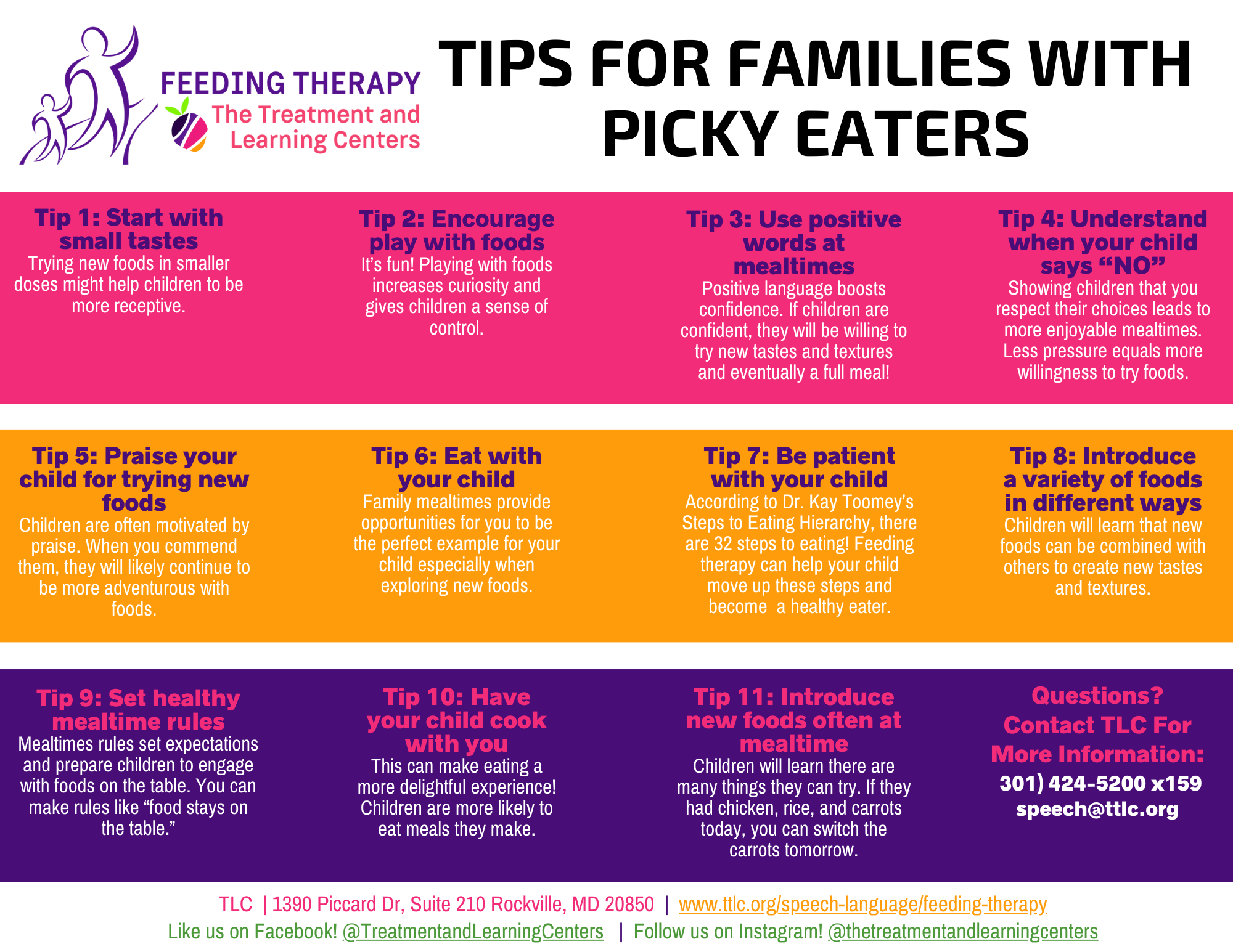
Downloadable “Feeding Therapy Tips” Parent Handout
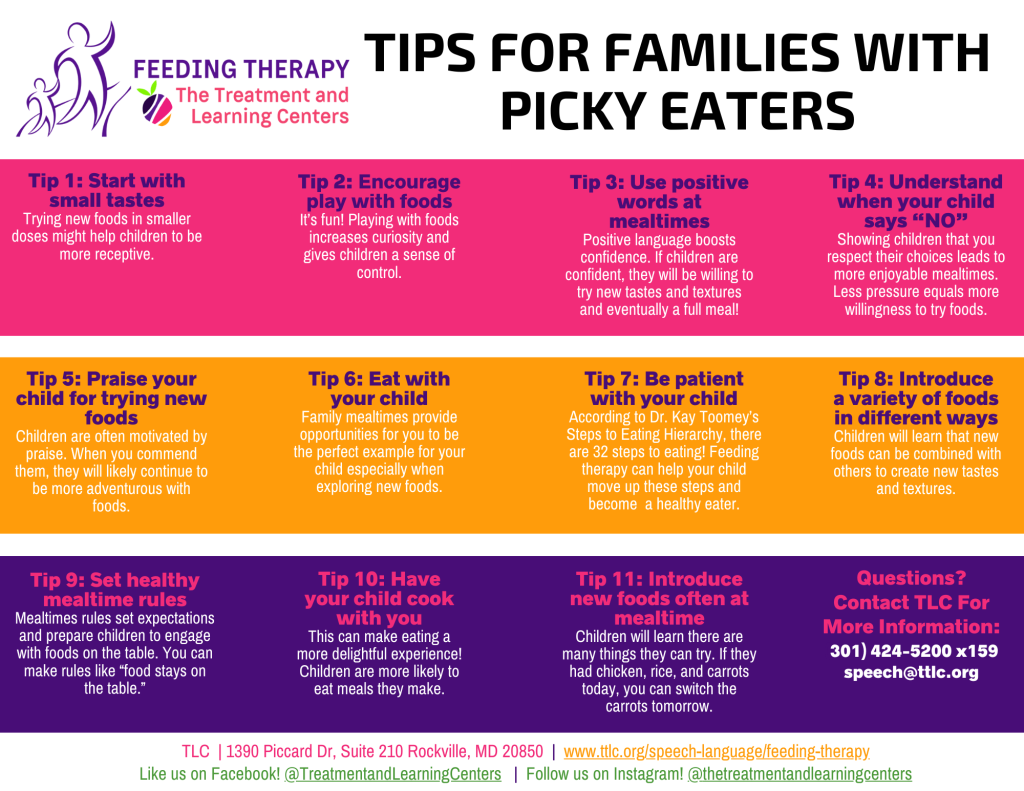
If you are concerned about your child’s eating, please contact us to schedule an appointment: (301) 424-5200 x159 or OutpatientScheduling@ttlc.org
가상 서비스
TLC는 외래 환자 언어 병리학의 가상 서비스에 개방되어 있습니다. 우리는 다음과 같은 원격 의료 옵션을 제공하고 있습니다 :
- 매주 개별 음성 언어 및 급식 원격 치료 세션은 Zoom을 통해 제공됩니다.
- 치료 세션은 자녀의 조음, 언어, 수유 및 놀이 기술을 개발하는 데 도움이 될 수 있습니다.
- AAC 장치를 사용하는 어린이를위한 개별화 된 상담 및 치료
- 줌을 통한 초기 음성 언어 화면
- 자녀의 언어 또는 언어 능력에 관한 질문에 답하기 위해 언어 병리학 자와의 개별화 된 상담
If you are a new client and would like to schedule one of our virtual services or have questions about speech-language services at The Treatment and Learning Centers, please contact us at 301-424-5200 x159. Click here for a sample of our virtual speech-language therapy sessions.
붉은 깃발
자녀가 가정, 학교 또는 지역 사회에서의 일상 활동에 어려움을 겪고 있습니까? 그들은 자신의 또래의 다른 아이들에게 영향을 미치지 않는 것처럼 보이는 도전을 경험합니까? 그렇다면 소아 언어 병리학자가 도움을 줄 수 있습니다. 아래는 음성 언어 평가를 보증 할 수있는 붉은 깃발 목록입니다.
18 개월까지, 귀하의 자녀가 :
- 첫 번째 단어를 구두로 표현하기 시작하지 않았습니다.
- 그 / 그녀의 이름에 응답하지 않습니다.
- 간단한 지시를 따르지 않는다.
귀하의 자녀가 2 세까지 :
- 약 200 단어 어휘가 없습니다.
- 두 단어 문구 (예 : "더 많은 주스")를 사용하지 않습니다.
- 간단한 척 놀이 기술을 보여주지 않습니다.
3 세까지 귀하의 자녀가 :
- 적어도 세 단어 문장을 사용하지 않습니다.
- 간단한 "누가"와 "무엇"질문에 대답 할 수 없습니다.
- 시간의 약 75%를 이해하지 못하는 음성 사용
- 단어의 일부를 반복하지 않고 쉽게 말할 수 없습니다.
4 세까지 귀하의 자녀가 :
- 언제 어떻게 질문을 할 수 없습니다.
- 하루 동안 일어난 일에 대해 이야기 할 수 없습니다.
- 나, 너, 나, 우리, 그리고 그들처럼 대명사를 만들 수 없다.
5 세까지 귀하의 자녀가 :
- 처음, 다음, 다음, 마지막과 같은 순서에 대한 단어를 이해할 수 없습니다.
- 시간의 100 % 이해되지 않는 음성을 사용합니다 ( /r / , / l / 또는 "th"와 같은 소리에 대한 실수가 있음).
- 짧은 이야기를 할 수 없다.
- 대화를 유지할 수 없습니다.
Meet Our Team

Safisha Seifullah, M.S., CCC-SLP
레베카 말스, M.S., CCC-SLP
Suzy Mabiala, M.S., CCC-SLP
Maura Bizzozero, M.A., CCC-SLP
Get in Touch With Us
전화
(301) 424-5200 ext. 159
주소
1390 Piccard Dr, Suite 210
Rockville, MD 20850