概述
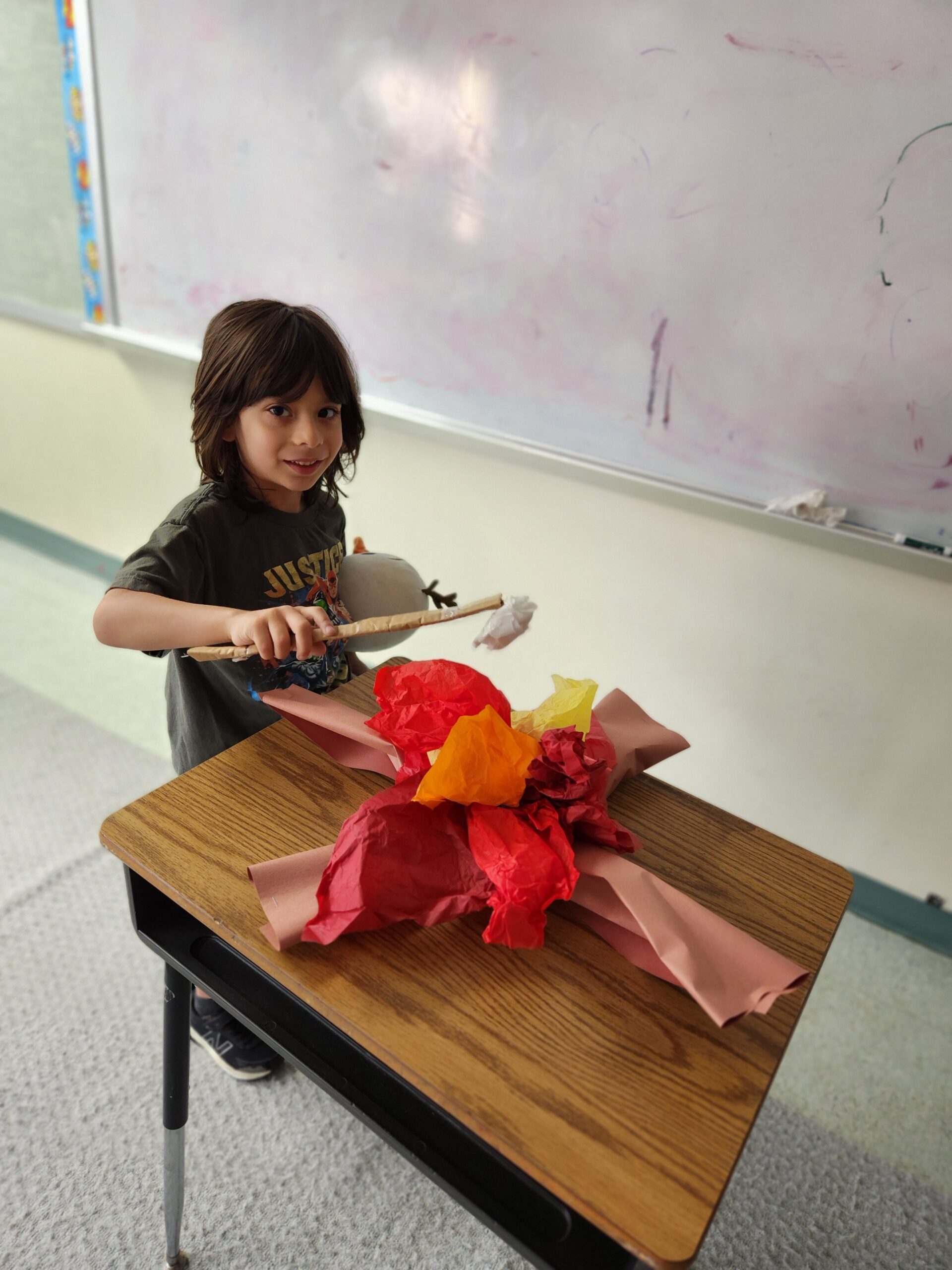
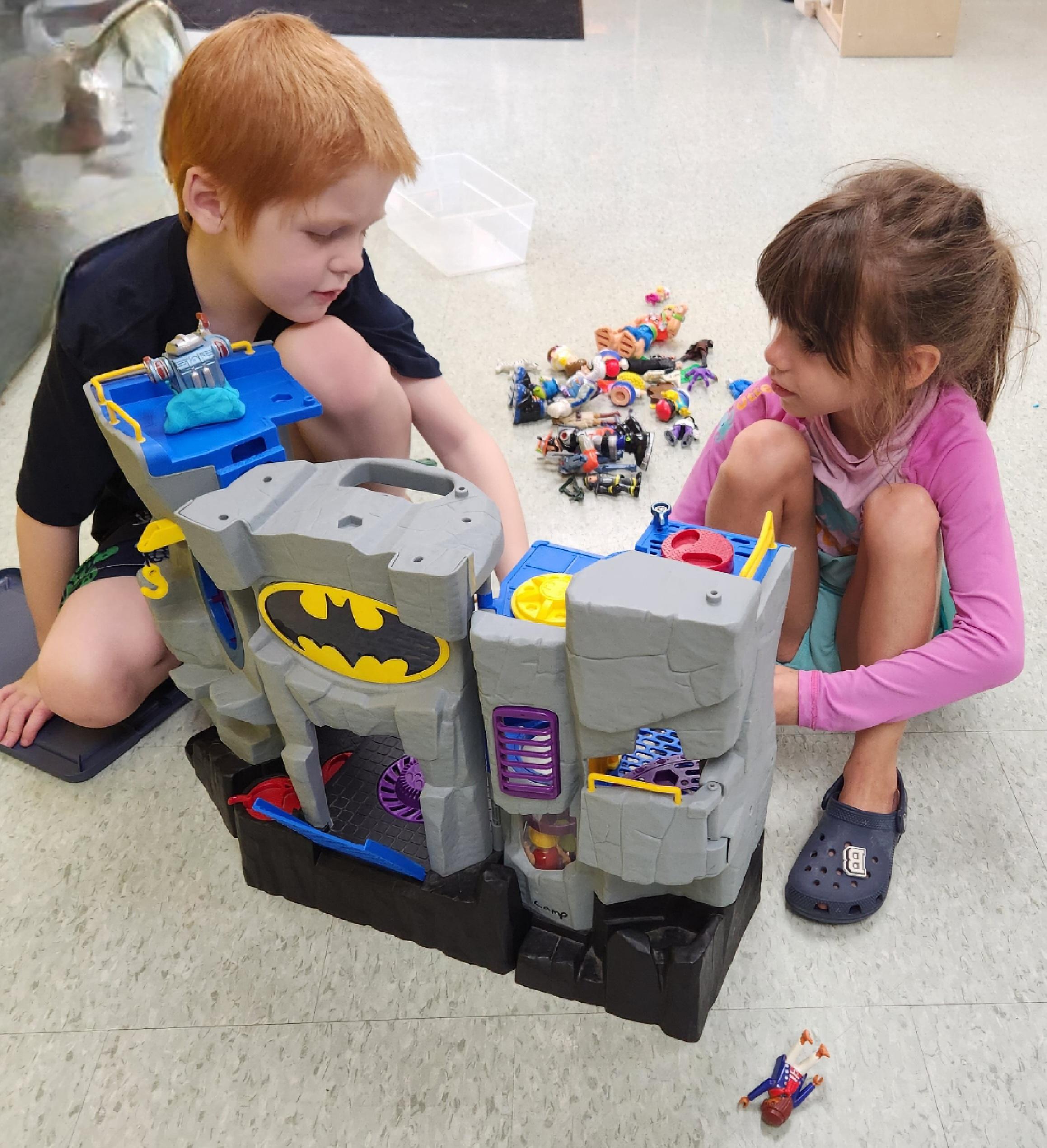
我們的理念
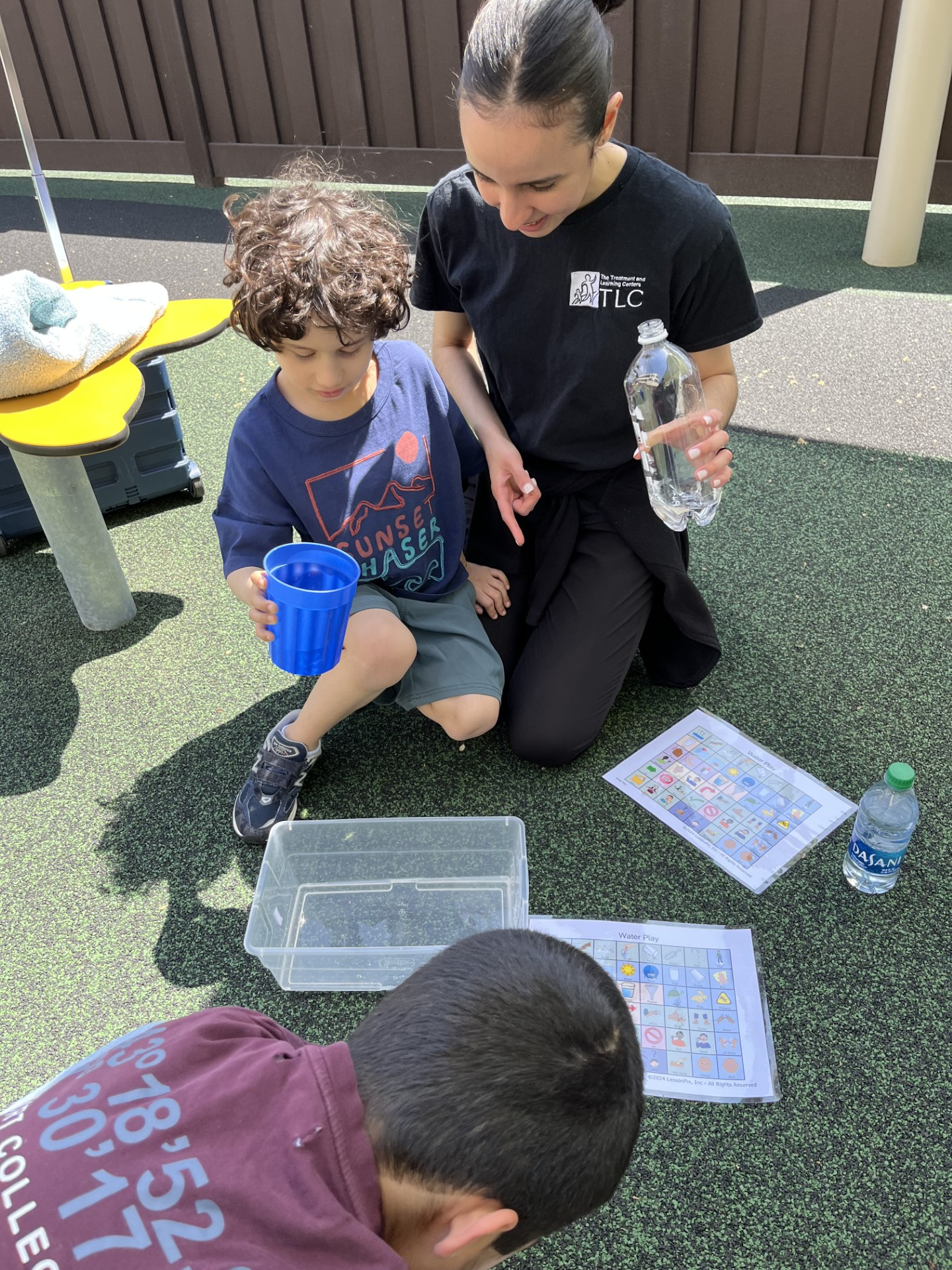
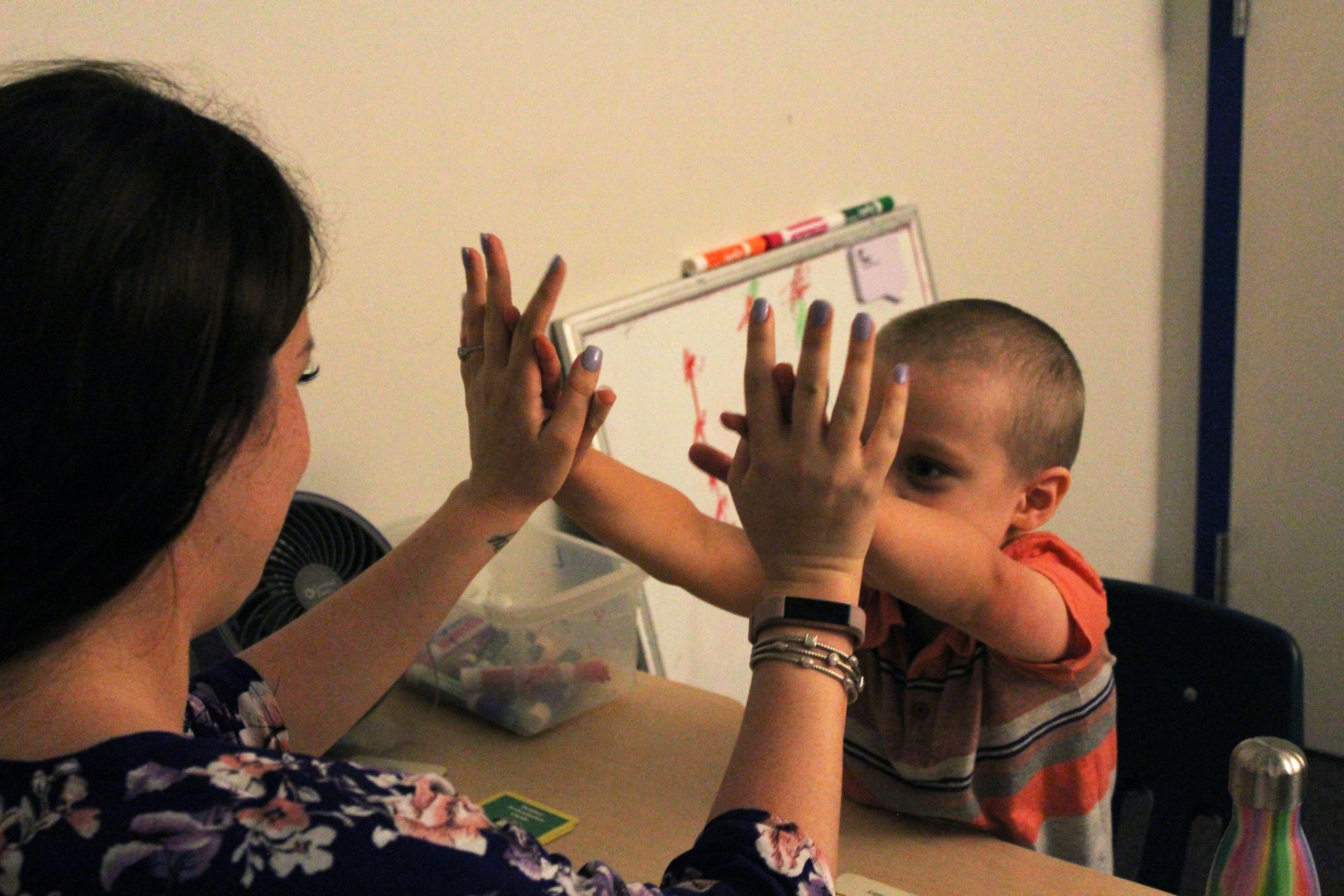
我們計劃理念的核心是相信我們的臨床醫生治療兒童,而不是殘疾。考慮到這一點,我們制定了個人治療計劃,以解決每個孩子的功能結果,使用整體和協作的方法,考慮家庭,工作或學校以及社區的溝通需求,跨學科工作以滿足整個人的需求。
我們的員工
我們的言語語言病理學家擁有碩士學位,美國言語語言聽力協會的臨床能力證書,以及馬里蘭州考官委員會心理健康和衛生部的執照。
專業領域
Our staff offers a wide variety of expertise, including training in Augmentative-Alternative Communication, PROMPT training, Hanen certification, Social Thinking®, Visualizing and Verbalizing®, The SOS Approach to Feeding, Orofacial Myofunctional Disorders, Floortime™, Meaningful Speech Course (Gestalt Language Processing/Natural Language Acquisition), and Lee-Silverman Voice Training (LSVT) LOUD.

程式
我們提供個人和團體治療課程。治療的頻率、持續時間和持續時間取決於過去一年內當前評估報告的發現和臨床建議,以及臨床判斷。
- 治療計劃旨在滿足每個孩子的個人需求,以最大限度地提高他/她的溝通能力。
- 提供概述兒童目標的正式治療計劃。定期完成進度報告,以記錄兒童在目標和持續需求領域方面的持續進展。
- 家庭參與和指導是所有治療計劃的一個組成部分。強調家庭程式設計以支持和促進技能的傳承。
- 治療與參與兒童護理的其他專業人員協調。TLC提供的服務包括:聽力測試,職業治療,諮詢,心理和教育測試以及輔導。在適當的時候,轉介到其他學科接受其他服務。
言語語言治療涉及以下領域:
- 語言障礙
- 社會語用語言障礙
- 運動言語/發音障礙
- 餵養障礙
- 流利度障礙
- 運用障礙
- 構音障礙
- 增強性 - 替代溝通需求
TLC’s Speech-Language Pathology Department offers in-person and virtual voice therapy for adults and children.
Symptoms of a Potential Voice Disorder Can Include:
- Rough, breathy, strained, strangled, or inconsistent vocal quality
- Abnormally high or low pitch/loud or soft volume
- Vocal fatigue or loss of voice after extended use
- Frequent coughing or throat clearing
- Pain while speaking or singing
- Constant or periodic feeling of a lump in the throat
- Episodes of breathing difficulties
- Frequently running out of breath while speaking or singing
- Voice-related gender dysphoria
- Loss of vocal range in pitch or volume
Voice and Upper Airway Disorders We Treat Include:
- Vocal Hyperfunction/Muscle Tension Dysphonia
- Vocal Nodules and Polyps
- Induced/Exercise-Induced Laryngeal Obstruction (ILO/EILO)
- also called Paradoxical Vocal Cord Motion (PVFM) or Vocal Cord Dysfunction (VCD)
- Vocal Fold Paralysis/Paresis
- Spasmodic Dysphonia
- Chronic Cough
- Post-Operative Voice Care
- Granuloma
Gender-Affirming Voice Care:
- Gender-affirming voice and communication care, or GAVC, can help transgender and gender diverse individuals align the expression of their speaking voice with their identity. GAVC involves more than just adjusting pitch – intonation, resonance, loudness, speech smoothness, gesture, and many other parameters affect how we use our voice and how we are perceived. Working with a speech-language pathologist to maintain vocal change in an efficient, healthy, and sustainable way is key for long-term success.
Voice and Upper/Airway Evaluations:
TLC’s Voice and Upper Airway evaluations consist of three major parts:
- Case History – a detailed conversation with the clinician about the history of the problem or concern, including quality-of-life questionnaires and voice-related daily life tasks
- Voice Measurements – recordings are taken of the client performing various vocal tasks; these are analyzed using a variety of technological and perceptual methods to yield both objective and subjective data about vocal quality and functioning
- Aerodynamic Measurements – objective and subjective measurements of the client’s respiratory functioning and breath-voice coordination are taken using data from spirometry and other respiratory tasks
Some evaluations may include viewing the throat (pharynx and larynx) using a small, curved mirror, an in-office procedure called mirror laryngoscopy. If further imaging or evaluation is indicated, the clinician may order a referral to an otolaryngologist (ear-nose-and-throat/ENT).
Other referrals the clinician may make to coordinate care include pulmonology, nutrition, allergy, neurology, gastroenterology, cardiology, psychology, and other specialists.
Contact us for more information about our Voice and Upper Airway Program or to schedule services:
301-424-5200 x159 or OutpatientScheduling@TTLC.org
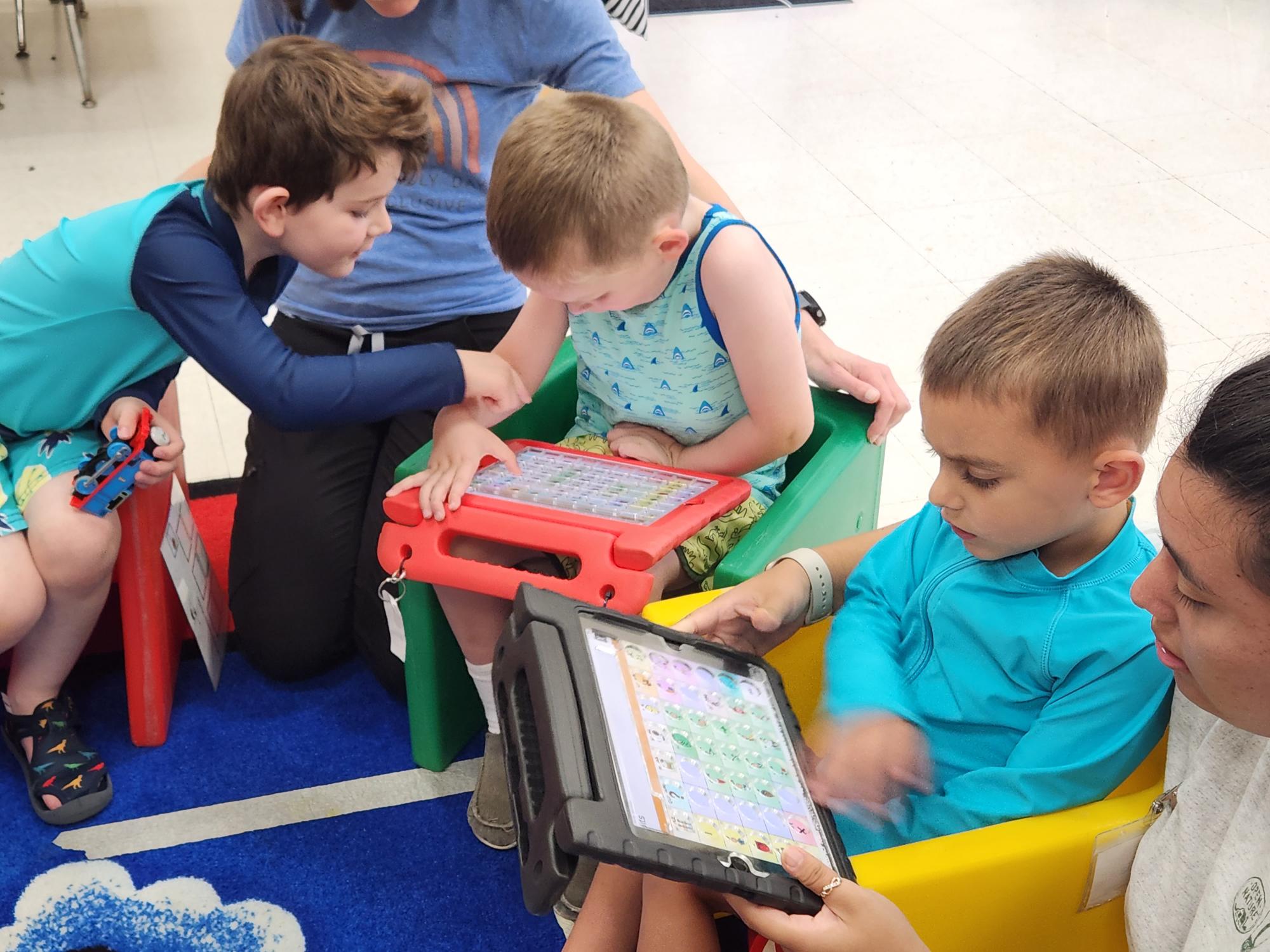
At TLC, our goal is to provide all individuals with a mode of communication that allows them to express their wants and needs and to develop their social communication skills. Our therapists provide assessments to determine the best AAC solution for the individual and therapy services to develop AAC competencies so the individual can communicate more effectively.
What is AAC?
AAC means all of the ways that someone communicates besides talking. People of all ages can use AAC if they have trouble with speech or language skills. Augmentative means to add to someone’s speech. Alternative means to be used instead of speech. Some people use AAC throughout their life. Others may use AAC only for a short time, like when they have surgery and can’t talk.
There are a lot of different types of AAC. No-tech and low-tech options include things like
- gestures and facial expressions,
- writing,
- drawing,
- spelling words by pointing to letters, and
- pointing to photos, pictures, or written words.
High-tech options include things like
- using an app on an iPad or tablet to communicate and
- using a computer with a “voice,” sometimes called a speech-generating device.
A person may use different types of AAC because there are many ways that we all communicate. An AAC system means all of the tools of this type that a person uses. (from ASHA.org)
What happens at an AAC Evaluation?
Therapists at TLC use feature matching, the process of matching an individual’s unique skills and needs to the features of AAC communication systems, tools, and strategies. Therapists obtain information about an individual’s receptive and expressive language skills, speech skills, vision, hearing, and motor skills. They then determine what communication needs exist and trial AAC systems to determine which ones can best meet those needs. AAC solutions could be low-tech or high-tech.
Why TLC AAC Therapy?
AAC therapy at TLC includes the following strategies to help an individual become a successful communicator:
- Developing AAC competencies with targeted goals
- Using core word teaching strategies
- Supporting Gestalt Language Processors who use AAC
- Integrating literacy instruction
- Supporting communication partners
- Using evidence-based practices such as modeling and least to most prompting
- Increasing engagement and motivation for communication
- Facilitating carryover of skills to all communication environments
TLC Handout: Providing Solutions and Strategies for Communication Success if Your Child Has an AAC Device.
在TLC,我們的目標是讓用餐時間成為家庭的愉快體驗。治療師與兒童及其家人一起工作,以確定餵養挑戰的原因,並制定個人化計劃以促進健康的飲食習慣。
TLC提供跨學科計劃,結合了我們門診言語語言和職業治療計劃的資源。TLC治療師擁有高級學位,並在其領域擁有豐富的經驗。
為什麼選擇TLC餵養療法?
- 評估/治療
- 以兒童為中心和基於遊戲的干預
- 家長教育和培訓
- 個人和團體治療
- SOS訓練有素的治療師
診斷可包括(但不限於)感覺和食物厭惡、生長遲緩、吞咽困難和口腔運動困難。
餵養問題的危險信號
- 具有挑戰性的用餐時間
- 飯中/飯後窒息、嘔吐、咳嗽、嘔吐
- 拒絕整個食物組(例如肉類、蔬菜)
- 表現出持續的體重增加緩慢或體重減輕
- 吃有限範圍的食物,“挑食者”
- 嘗試新食物有困難
- 進食時間超過30分鐘
- 有咀嚼食物困難
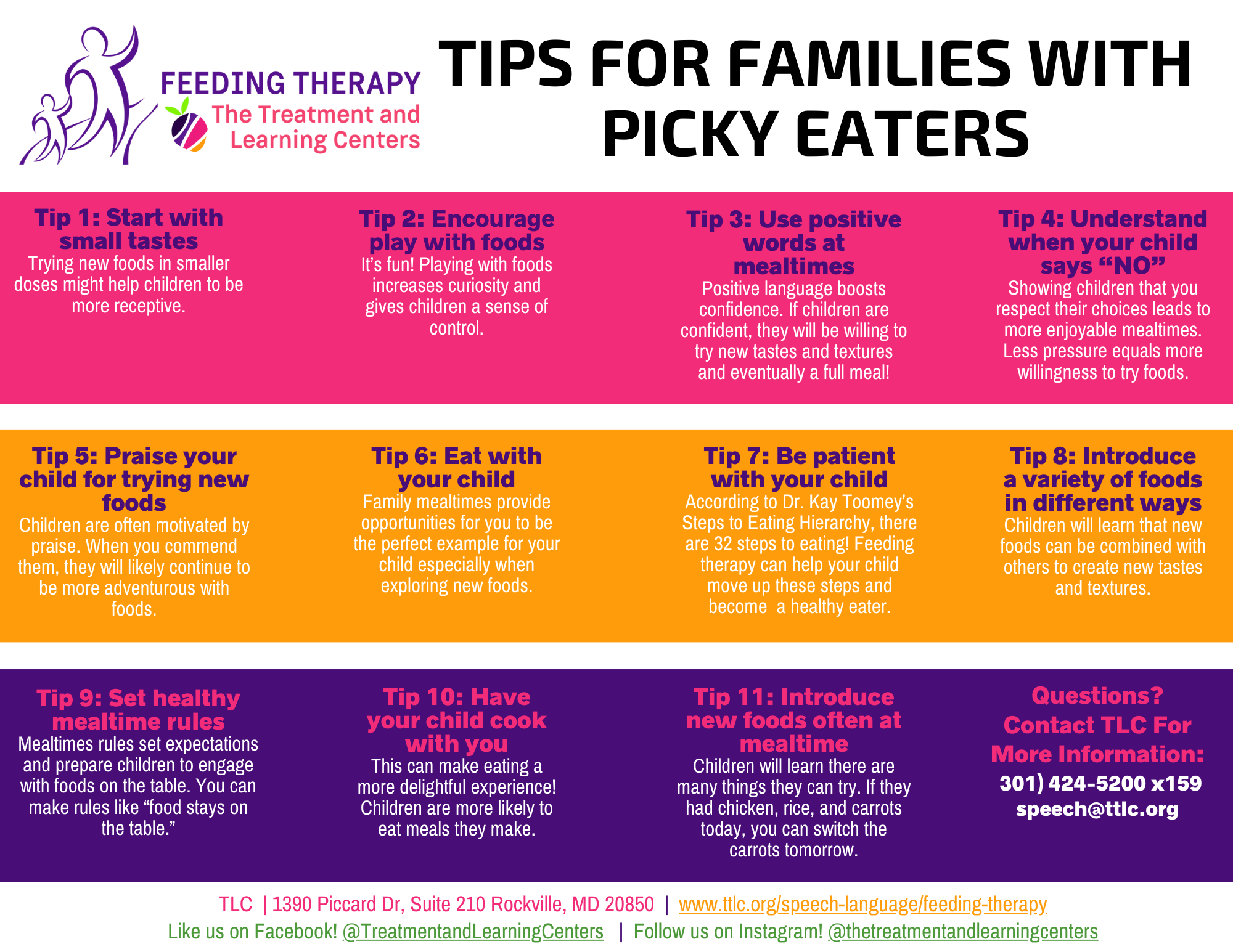
Downloadable “Feeding Therapy Tips” Parent Handout
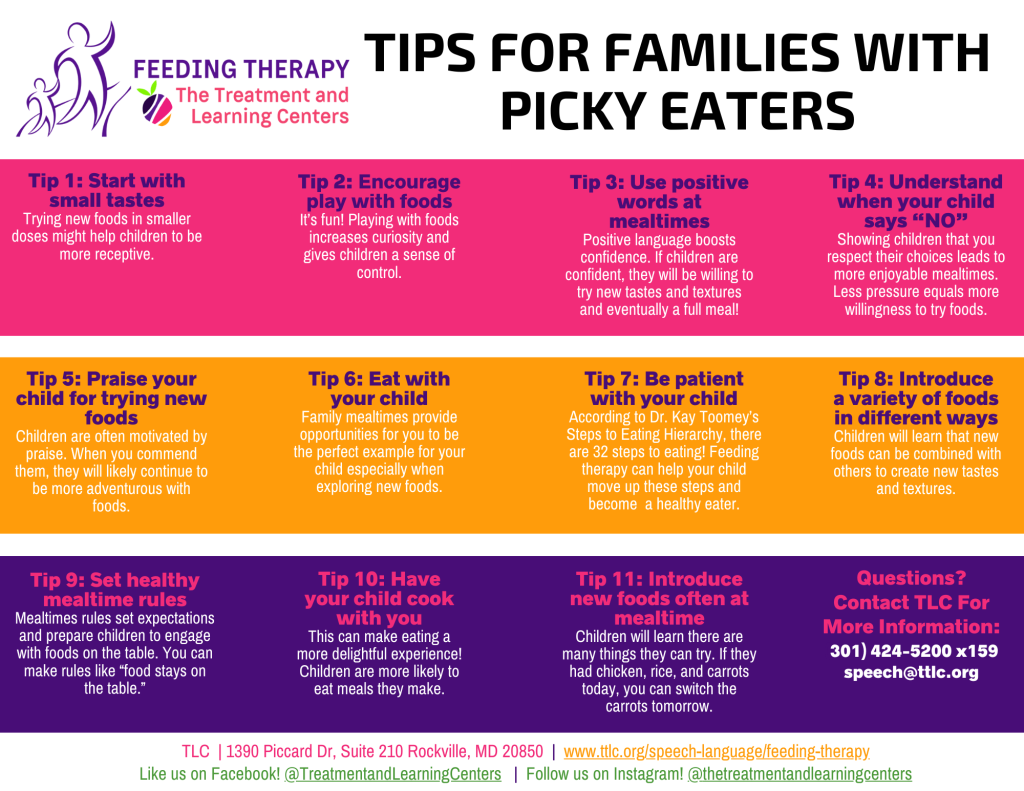
If you are concerned about your child’s eating, please contact us to schedule an appointment: (301) 424-5200 x159 or OutpatientScheduling@ttlc.org
虛擬服務
TLC對門診言語語言病理學的虛擬服務開放。我們提供以下遠端醫療選項:
- 每周通過Zoom提供個人言語語言和餵養遠端治療課程
- 治療課程可以幫助發展你的孩子的發音、語言、餵養和遊戲技能。
- 為使用加氣混凝土設備的兒童提供個性化諮詢和治療
- 通過縮放實現初始語音語言螢幕
- 與言語語言病理學家進行個性化諮詢,以回答您有關孩子言語或語言技能的問題
If you are a new client and would like to schedule one of our virtual services or have questions about speech-language services at The Treatment and Learning Centers, please contact us at 301-424-5200 x159. Click here for a sample of our virtual speech-language therapy sessions.
紅旗
您的孩子在家,學校或社區的日常活動是否有困難?他們是否經歷過似乎不會影響其他同齡兒童的挑戰?如果是這樣,兒科言語語言病理學家可能會有所説明。以下是可能需要進行語音語言評估的危險信號清單。
到18個月大時,如果你的孩子:
- 尚未開始用語言表達第一個單詞
- 不回應他/她的名字
- 不遵循簡單的指示
在 2 歲之前,如果您的孩子:
- 沒有大約200個單詞的詞彙
- 不使用兩個單詞的短語(例如,“更多果汁”)
- 不展示簡單的假裝遊戲技巧
到3歲時,如果您的孩子:
- 不使用至少三個單詞的句子
- 無法回答簡單的「誰」和「什麼」問題
- 使用大約75%的時間不理解的語音
- 如果不重複部分單詞,就無法輕鬆說話
到4歲時,如果您的孩子:
- 無法詢問何時以及如何提問
- 不能談論白天發生的事情
- 我們不能代詞,像我,你,我,我們和他們
到5歲時,如果您的孩子:
- 無法理解順序的單詞,如第一,然後,下一,最後
- 使用 100% 無法 100% 理解的語音(在 /r/、/l/ 或 “th”等聲音上有一些錯誤)。
- 不能講一個短篇故事
- 無法保持對話
Meet Our Team
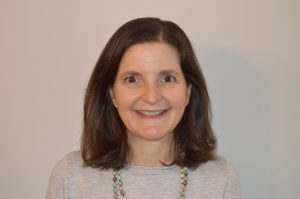

Safisha Seifullah, M.S., CCC-SLP
Rebecca Mals, M.S., CCC-SLP
蘇茜·馬比亞拉,理學碩士,CCC-SLP
Maura Bizzozero, M.A., CCC-SLP
Get in Touch With Us
電話
(301) 424-5200 ext. 159
位址
1390 Piccard Dr, Suite 210
Rockville, MD 20850